

ABOUT THE ALBUM
Drawing Sound — The Making of Montgomery Park
A Reflective Essay by Tyson Mangelsdorf, the Artist Behind Dead Electric

Tyson wrote, recorded, and illustrated Montgomery Park at his Pixelgarden Studios from 2021 to 2023.
About the Artist
THEME
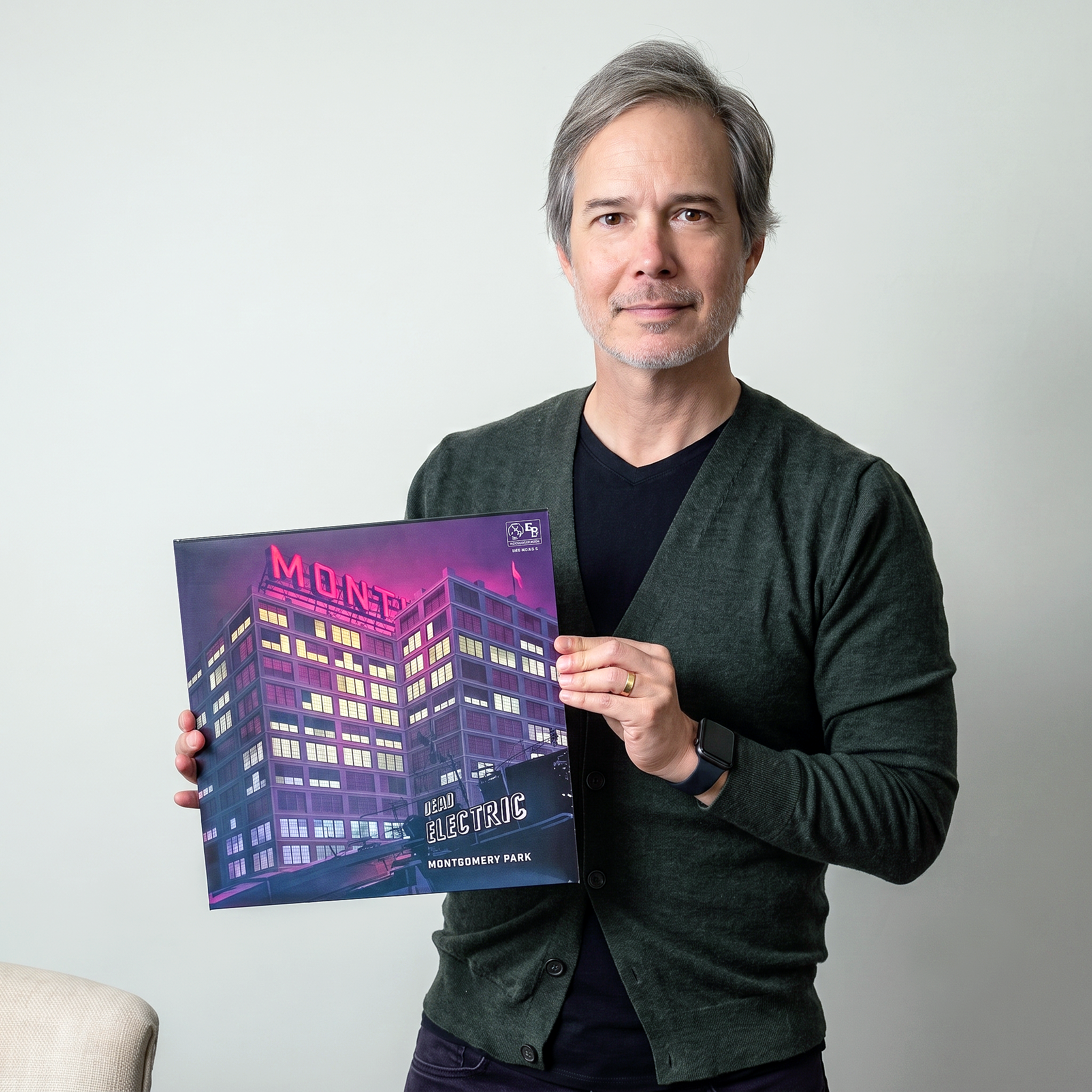
I wander the sidewalks of Portland and its surrounding neighborhoods often, especially during times of deep reflection. Throughout my life, familiar landmarks like the Water Tower in John’s Landing, George Rogers Park in Lake Oswego, and the Montgomery Park building in the Northwest Industrial District stand firmly in their presence, even as life continues to shift and change.
In recent years, my thoughts hovered around the passing of my parents and growing up in Portland. I frequently considered the depth of complexity and turmoil that alcoholism and divorce inflicted on my otherwise lovely childhood. They loved me and I loved them. Growing up was messy, but it was beautiful just the same.
I wanted to capture all of this as I began writing my first record.
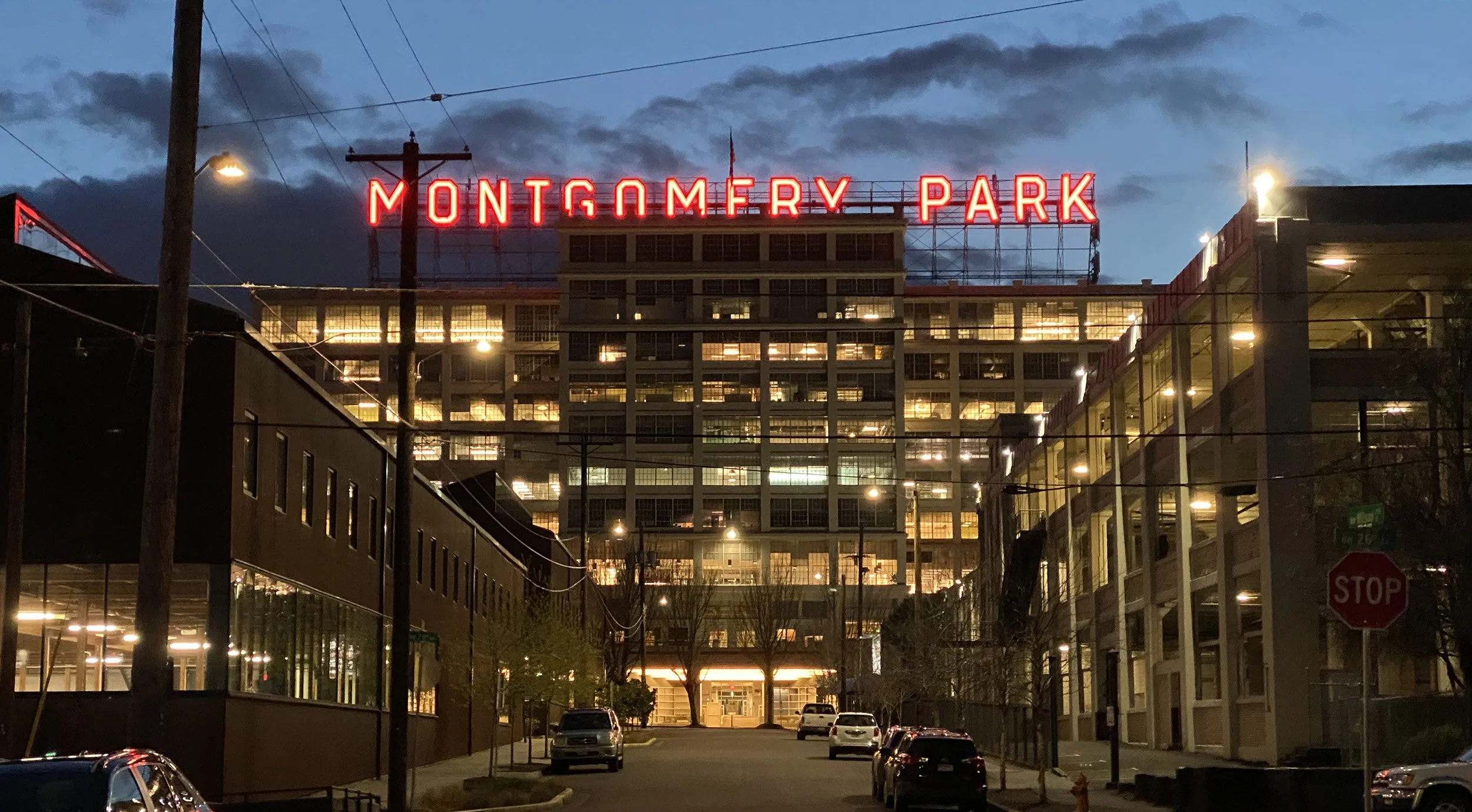
The Montgomery Park building in Northwest Portland, Oregon
WRITING
I often record myself jamming most evenings and have developed quite a library of song ideas over the years. (These are very rough and can include just about anything from simple riffs and chord progressions to complete song ideas.)
In late November 2021, I began sifting through my recordings for potential song ideas. Once I had the selects narrowed down, it was time to focus on sequencing. These songs needed to flow together in tempo, instrumentation, and story so the record would be something you sit with and listen to from start to finish.
By the beginning of February, the outline for my record was set with song subjects and track order.
Next, I defined song structures and began to write lyrics. While music ideas usually flow freely for me, words and poetry definitely do not. It took quite some time and several rewrites to dial in each line into a place that felt right. Later, while recording vocals, I continued to refine a few words and phrases so everything would sound more conversational and natural. It was a bit of a wrestling match, but I really learned to love the process.
Being a visual artist for decades, stepping into the artistry of sound was a complete mind-bender.

RECORDING
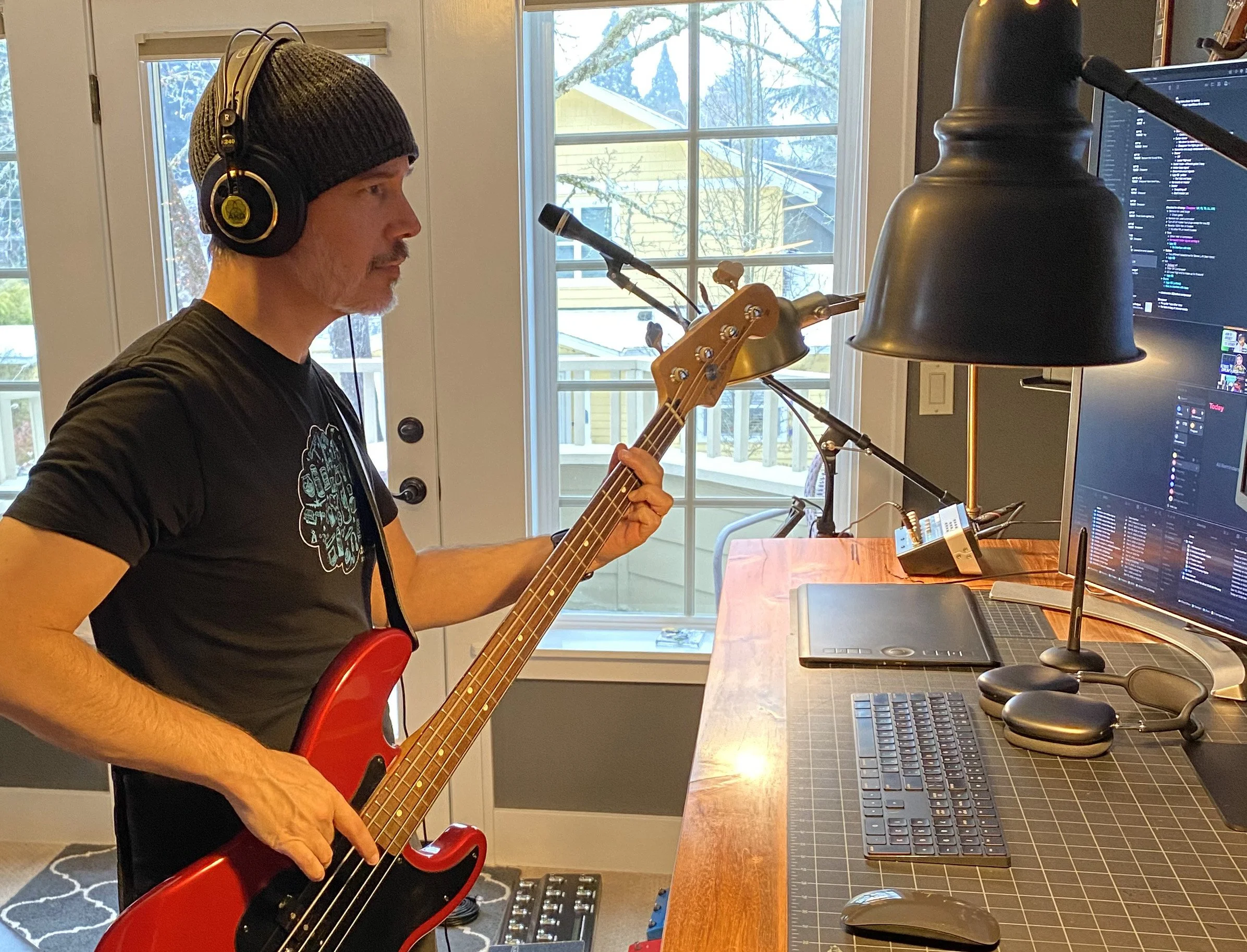
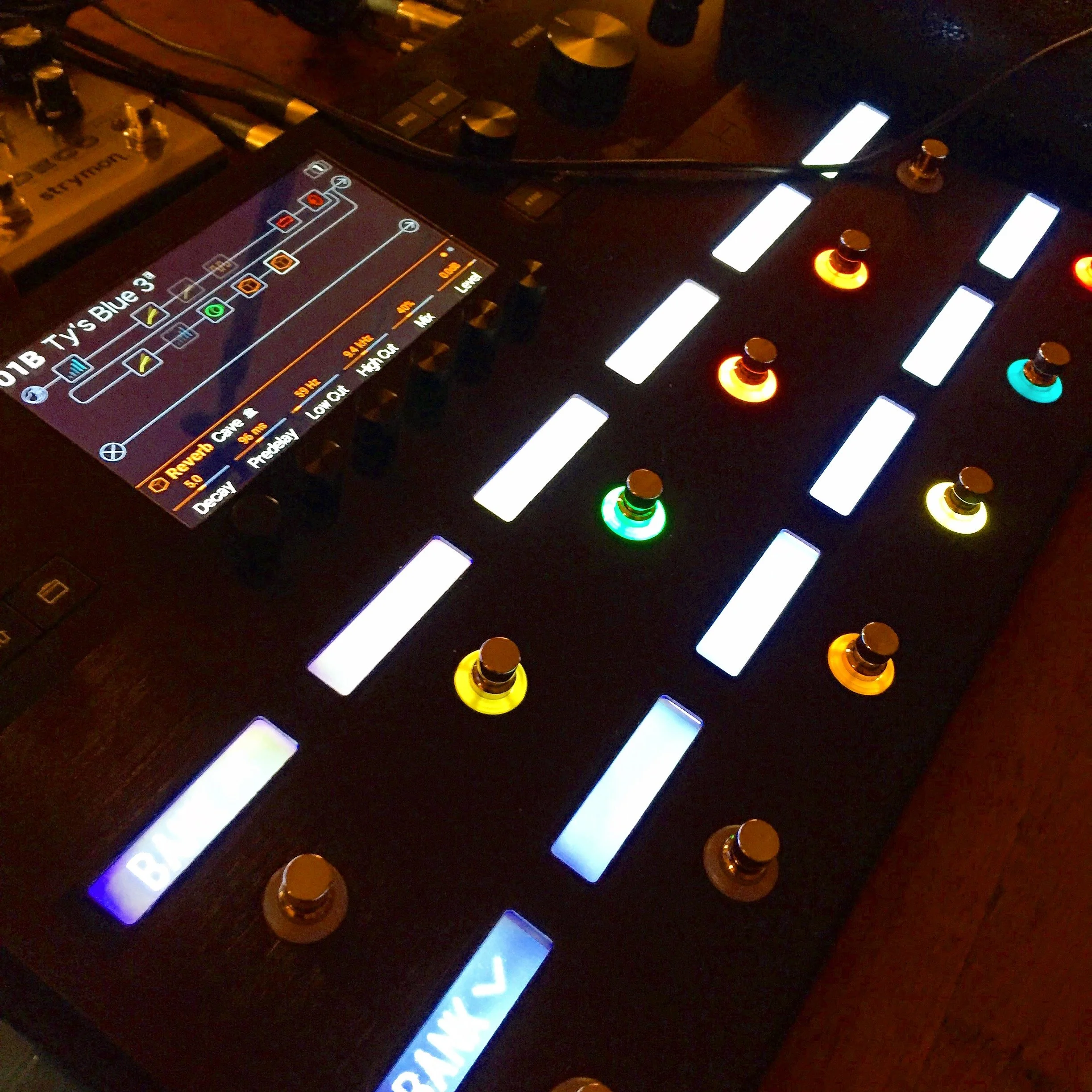
Recording, mixing, and mastering were completely new for me, so I needed to pause for a couple of months to learn everything I could about recording and working in Logic Pro through online courses.
Once I had a basic understanding of workflow, I began recording. It would be me alone playing all the instruments (except drums) and doing the vocals track by track. As for the drums — I manually programmed them beat by beat in MIDI, methodically adding nuance and tempo drift to get them to sound as natural as possible.
MIXING
By July of 2022, I began mixing.
Being a visual artist for decades, stepping into the artistry of sound was a complete mind-bender. You could dial in a mix one day thinking it sounds fantastic only to listen to it again on the next day thinking everything sounds off. I found out that fluctuating feelings, thoughts, and physiology significantly affect how you perceive sound—a phenomenon know as psychoacoustics.
To use a visual analogy, you pick a teal color swatch one day as a perfect hybrid between blue and green, but when you look at it the next day, you notice it’s way too close to green. The day after think no, it’s actually more blue. Reality is now elusive.
To compensate, I decided to leverage time as a tool. The only way to get my ears to hear something close to truth was to do a mix one day and listen again two days later to make adjustment notes. Issues are more easily recognized on a fresh listen, so I repeated this process over and over until I could go multiple sessions without hearing any need for adjustments. Needless to say, this approach took a ridiculously long time — about six months.
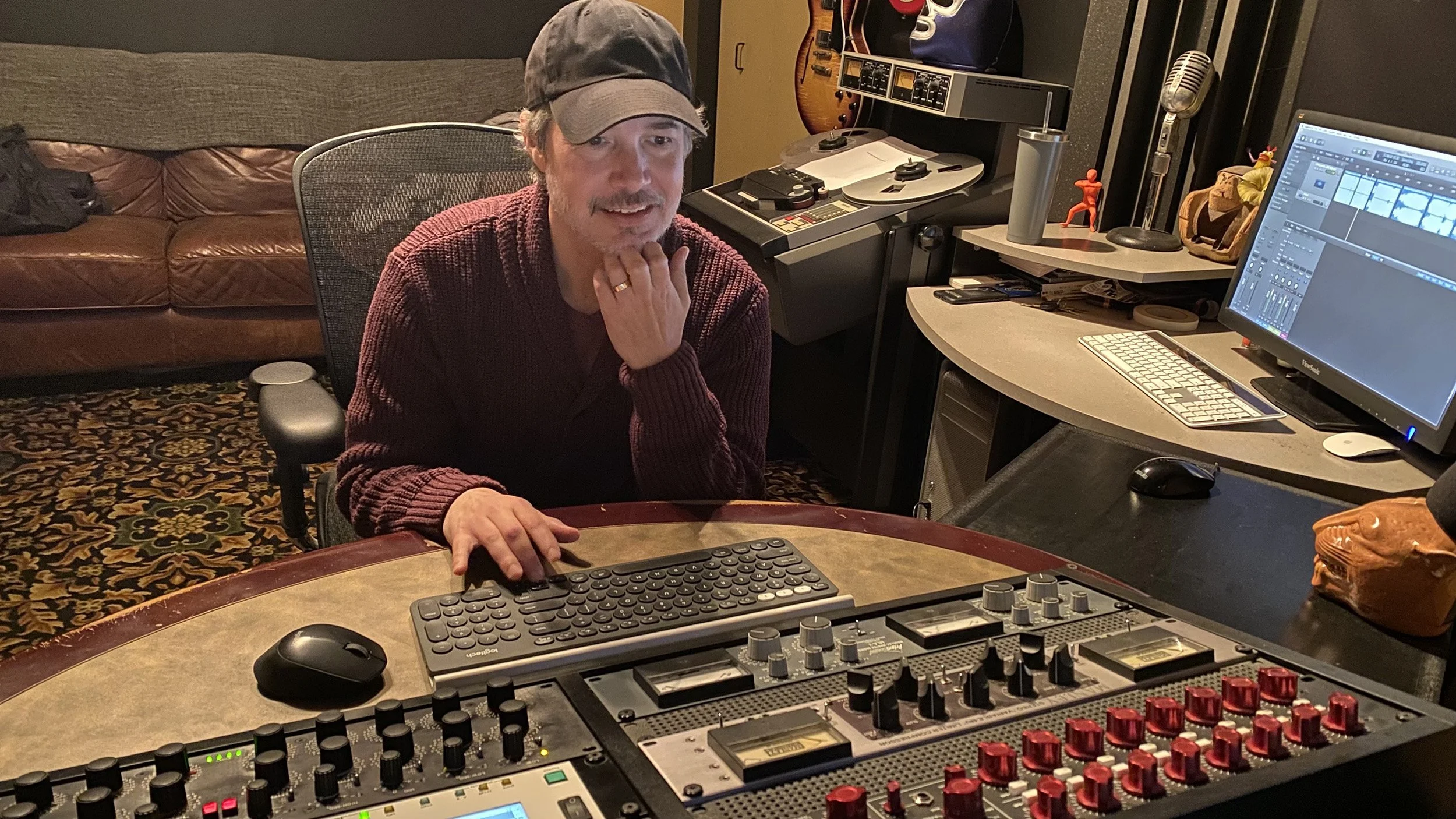
As a final quality check, I reached out to my great friend Brud Giles at Fremont Recording to put some professional ears on my tracks. To my amazement, he said the tracks sounded really great — very high quality. And as a drummer himself, he complimented me on the drums and couldn’t believe they were created digitally.
The only advice he offered was to re-record the bass with a higher input signal level to reduce the hum coming through and to add a second guitar with a slightly different sound to create more depth and scale. With those fixes, I wrapped mixing in early 2023.
MASTERING
Next, Brud referred me to Ryan at Foster Mastering for a refined frequency adjustment for each sound in the mix and ensuring the dynamics are technically in range for most media output formats. Only deeply experienced ears can catch the nuance and subtleties that add up to affecting the overall ‘color’ of a track, and at the end of the session, Ryan proved it by cranking up my album on the big studio speakers to where you could feel it in the room. It sounded ridiculously amazing.
The album was ready for digital release, but getting to analog vinyl required one more step.
Vinyl records cannot always take the full range of sound encoded in digital music—the grooves can be cut too deep at the lowest sound frequencies, causing the needle to bounce right out—so, another pass at track mastering is required. (Not to worry though—analog playback for vinyl adds back in a warmth and depth that is precious in its own right.)
Brud, again with the referrals, sent me to Adam at Telegraph Mastering to master once more for vinyl and cut the lacquer production master that goes to the record manufacturer.
My very personal, internalized idea had become an outward, physical expression.
ARTWORK & VINYL PRODUCTION
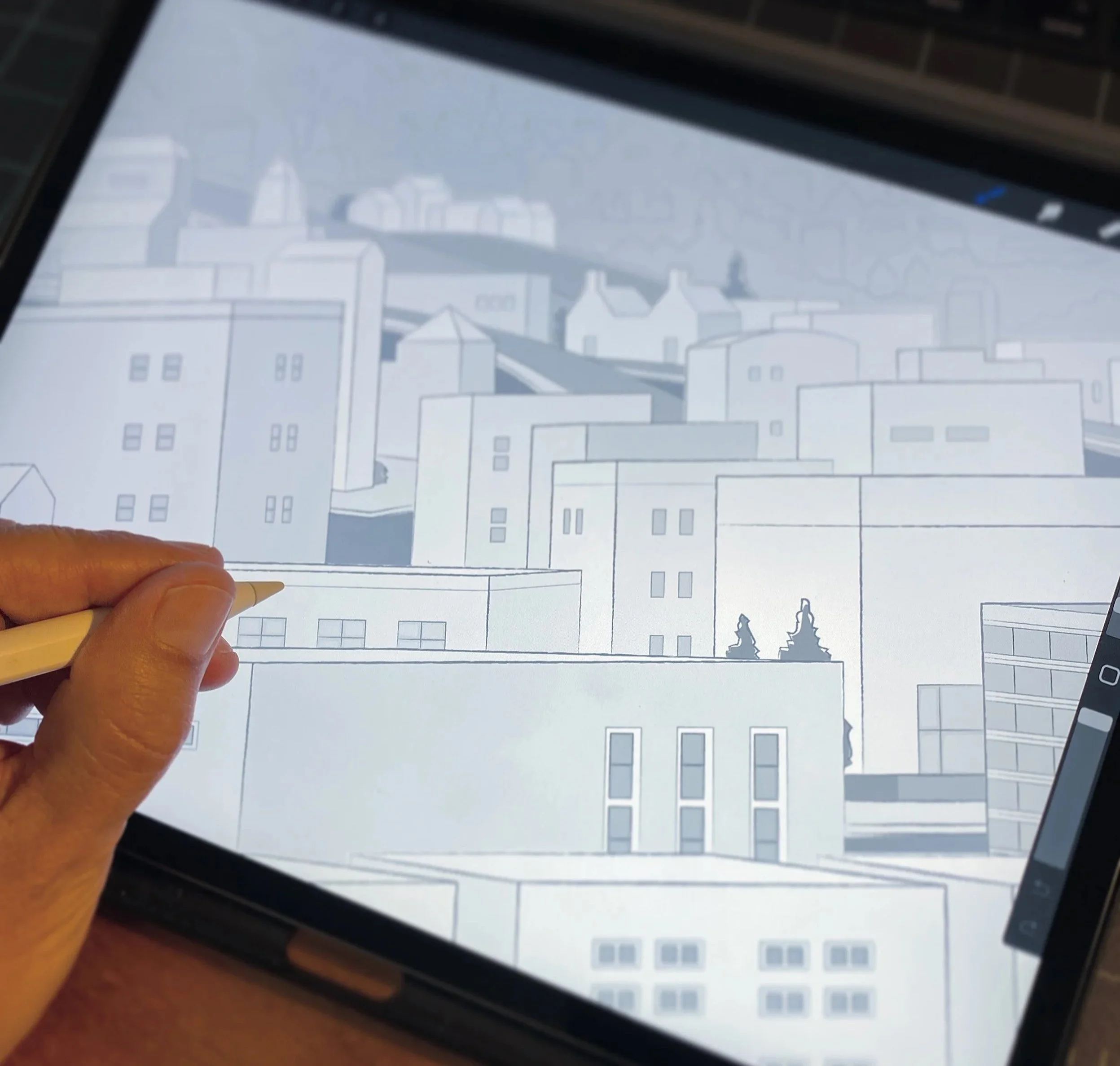
Next, I wanted to create a piece of art for each song and its lyrics. I always loved records you could revisit again and again — music has never been disposable to me. You searched for artists worth following and collect every album they make. My record would be something worth owning and keeping.
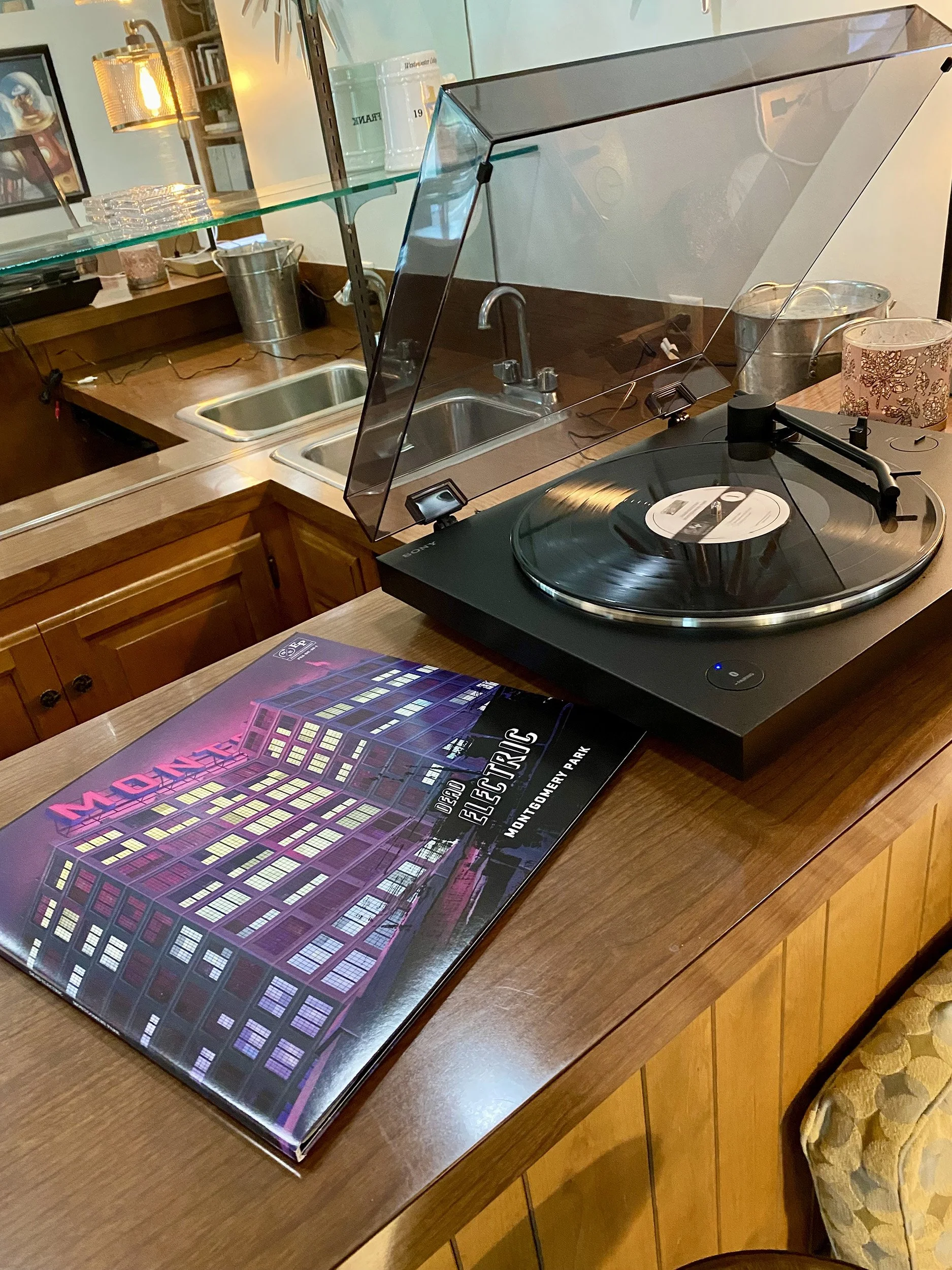
In late Summer 2023, I sent the finished art layouts to Cascade Record Pressing (now out of business as of June 2026) who delivered the finished records six months later at the start of 2024. The result was absolutely stunning.
Seeing the masterful jacket production and hearing the vinyl sound quality was deeply moving.
My very personal, internalized idea had become an outward, physical expression. You could touch it. You could pull the record from the sleeve, put it on the turntable, dial up the volume, and let the music wash over you as you flipped through the pages of art and lyrics.
BECOMING AN ARTIST
This process took a very long time and I was riddled with fear and doubt all along the way—I call it ‘wrestling the bear’. I am still learning to evolve from being a problem-solving visual designer to becoming an artist who clings less to logic and follows intuition wherever it leads.
It is a beautiful struggle, and I really connect with artists where you can see the struggle in the work. I hope that maybe you do too.
In the end, the work can be great or very far from it, but we are ultimately drawn to the human energy put into it. We all long for human connection and art is one of the few things that can cut through the noise and hit us directly and deeply. My hope is that you can connect with this record—that it might resonate in some way and elevate you even just for a moment.