

ABOUT THE ARTIST
Where Sound Meets Color — The Art and Music of Tyson Mangelsdorf
Tyson wrote, recorded, and illustrated Montgomery Park at his Pixelgarden Studios from 2021 to 2023.
The Making of Montgomery Park
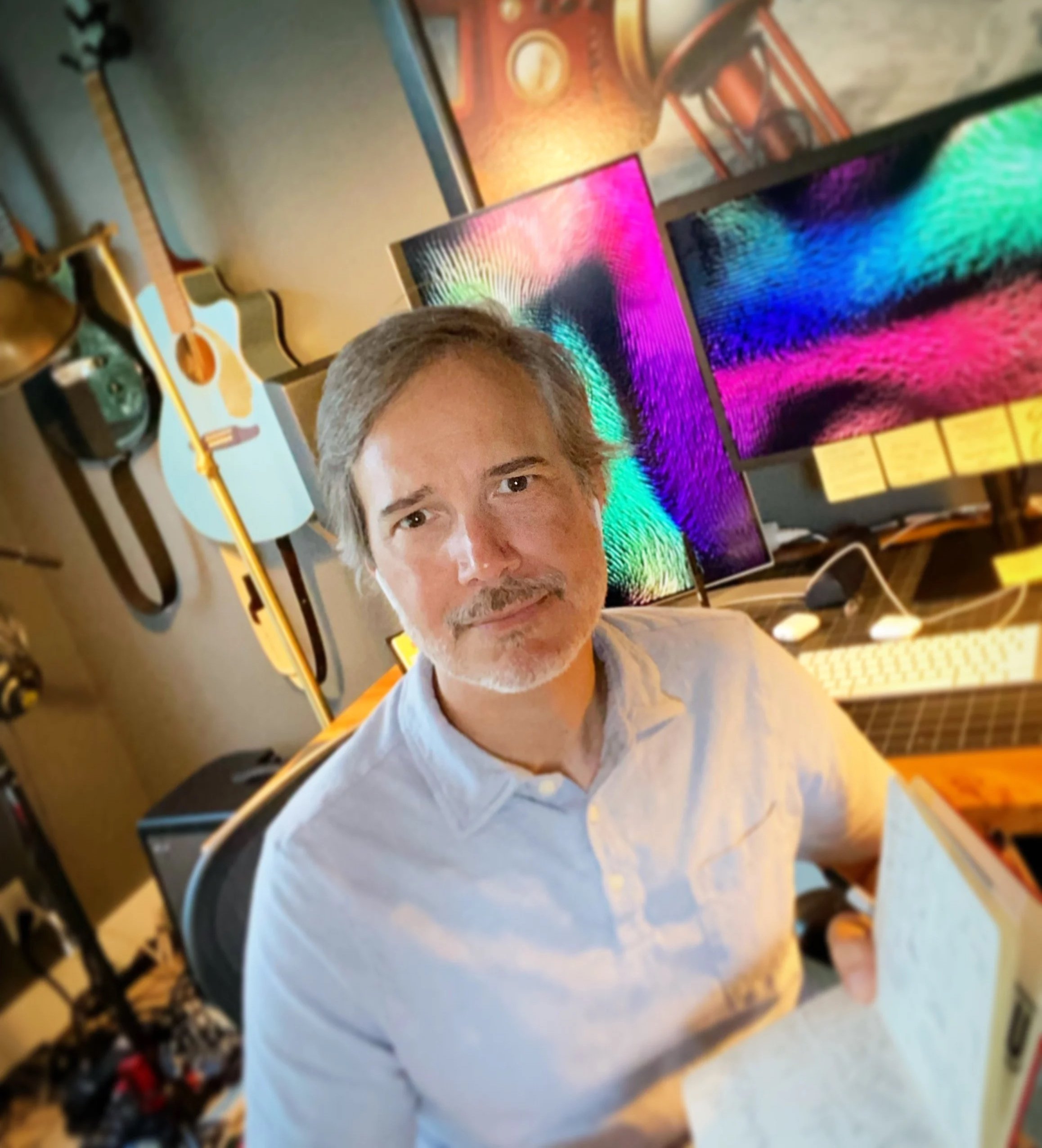
Portland-based artist and musician Tyson Mangelsdorf moves between sound and color with the ease of someone who never saw them as separate spaces in the first place. A professional illustrator and longtime figure in the city’s garage band and church music scenes, Tyson has spent decades quietly shaping a body of work that’s deeply personal, emotionally textured, and unmistakably his.
To step into Tyson’s world is to enter a space where guitar tones bleed into brushstrokes, and old landmarks hold the weight of memory. His creative output—whether visual, musical, or somewhere in between—is not about spectacle or polish, but presence. “I’m not chasing perfection,” he says. “It’s all about feel.”
ROOTED IN PLACE
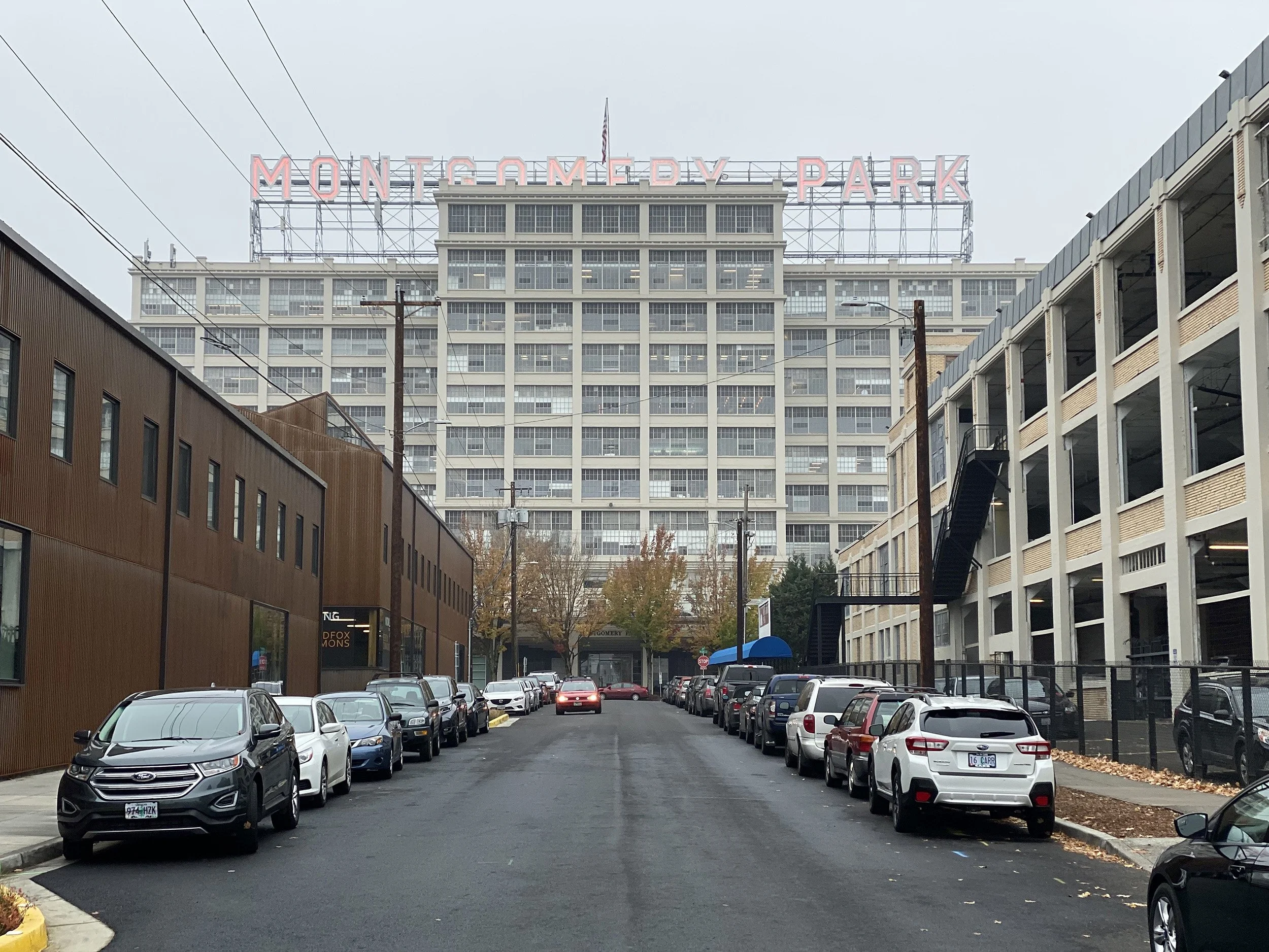
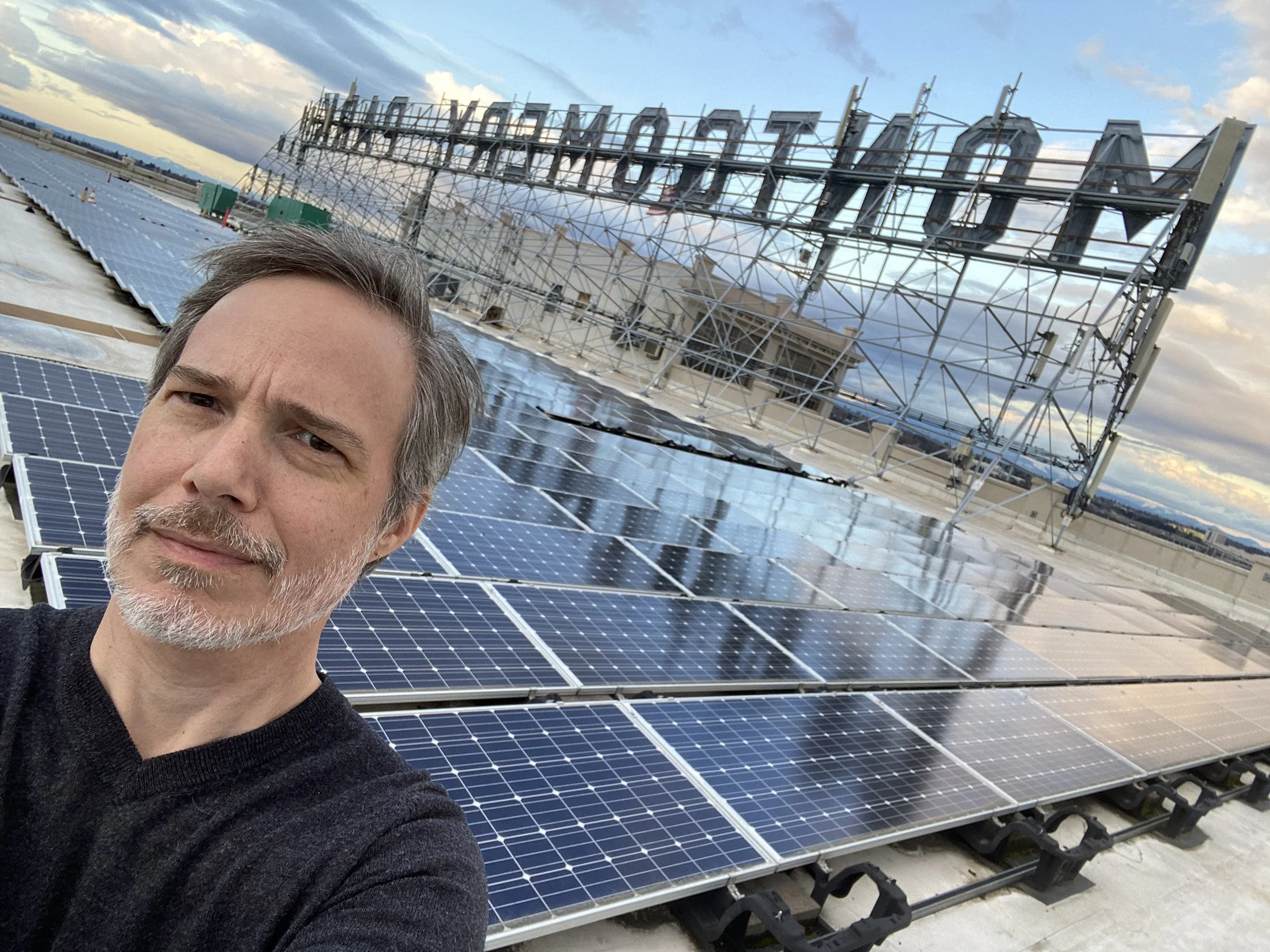
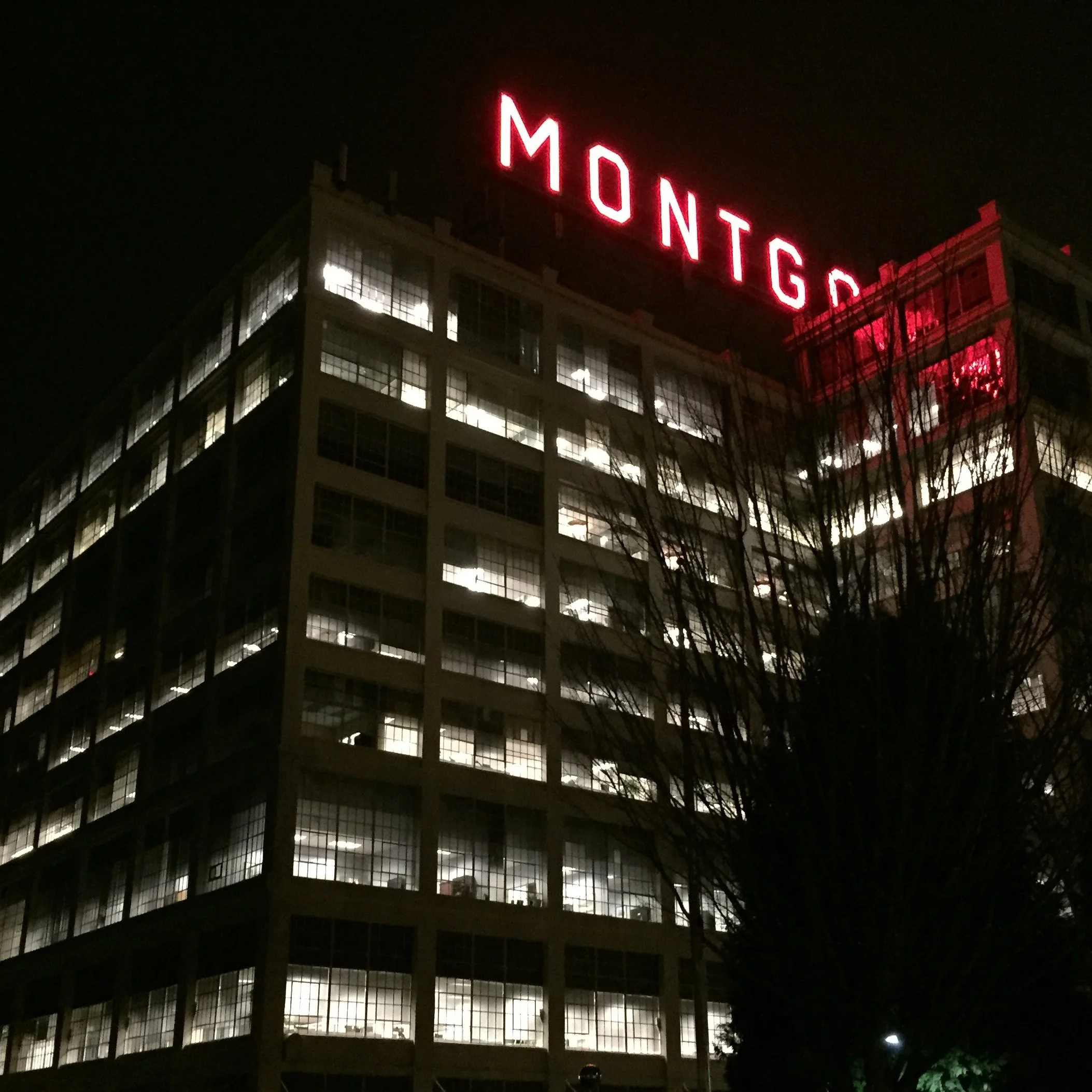
Raised in Portland, Tyson has long drawn inspiration from the city’s shifting landscape. Neighborhoods he once explored as a kid now serve as emotional landmarks in his latest release Montgomery Park.
“Even as life changes, those places stick with you,” he says. “They age as you age. They become part of your story.”
It’s this kind of personal mythology that threads through Tyson’s creative voice—a way of honoring the past while reckoning with its complexity. His childhood, marked by both warmth and hardship, often sits just beneath the surface of his songs and illustrations in Montgomery Park.

SOUND AS TEXTURE
Though Tyson’s musical roots stretch back to his early years—making up songs on guitar and recording lo-fi jams on cassette—it wasn’t until later in life that he fully stepped into recording and production. Armed with a DIY spirit and an ear tuned to emotion over precision, he taught himself how to produce and mix, layering tracks in his home studio, Pixelgarden.
“I like things a little raw,” he says. “Grainy recordings, vocals with breath in them, imperfections that make it feel alive.”
The music itself is hard to box in. There’s a warmth and weight to it—a blend of analog tones, introspective lyrics, and thoughtful pacing that invites listeners to linger. Much like his illustrations, the songs reward slow attention, revealing depth over time.
VISUAL ART AS COMPANION
Tyson’s background as a working illustrator is more than just a side note—it’s integral to how he approaches storytelling. Album covers, lyric sheets, and limited-edition vinyl artwork become portals into the same emotional landscape the music travels through. He creates with cohesion in mind, not just aesthetics.
“When someone holds a record in their hands, I want them to feel like they’re stepping into a space,” he says. “Not just listening to music, but sitting inside a story.”
His visual work, like his sound, is characterized by restraint and resonance—often leaning into minimalism, abstraction, or nostalgic textures. There’s a sense of weathered beauty to it all, like memory caught in amber.
I don’t care if I’m working with digital or analog tools, I’m looking for emotional truth between the lines.

BETWEEN THE LINES
Ask Tyson what drives his work and he’ll tell you it’s about emotional truth—the kind that shows up in the pause between chords or the imperfect brushstroke. Vulnerability is not just part of the process—it is the process.
“I don’t care if I’m working with digital or analog tools, I’m looking for emotional truth between the lines,” he says. “There’s an unarticulated reality we all encounter every day at a deep level—that’s what I want to capture.
Still, he’s careful not to overshare. His work often walks the line between personal and universal, leaving just enough open space for the listener or viewer to insert themselves.
“If someone spends time with my work and feels a little less alone, that’s success,” he says. “It’s about connection at every level.”
LOOKING AHEAD
Lately, Tyson says he’s thinking more about joy. After years of making Montgomery Park, which is grounded more in looking back in memory, loss, gratitude, and transition, he’s opening himself up to what’s next: connection, celebration, light.
“There’s always going to be heaviness in the work,” he says. “But I think I’m ready to let in more sunlight. Let the colors breathe a little brighter.”
A QUIET INVITATION
In a world often obsessed with speed and volume, Tyson Mangelsdorf offers something else entirely—authenticity, nuance, and inspiration at a spiritual level. His work is not made for disposable consumption but for life-long return visits. Like a familiar street corner that looks different in every season, his songs and illustrations reveal something new each time you come back to them.
And that, perhaps, is the greatest gift of where sound meets color—it gives us a place to feel, to remember, and to simply be.